

The United Nations Office at Geneva
Multimedia Newsroom
Press Conferences | UNFPA , WFP , WHO , OCHA , WMO
UN Geneva Press Briefing - 21 October 2025
UN GENEVA PRESS BRIEFING
21 October 2025
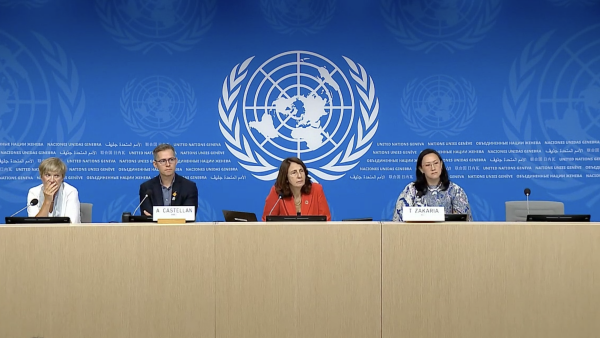
Alessandra Vellucci, Director, United Nations Information Service Geneva, chaired a hybrid press briefing, which was attended by spokespersons and representatives of the United Nations Populations Fund, the World Food Programme, the United Nations Office for the Coordination of Humanitarian Affairs, the World Health Organization and the World Meteorological Organization.
Situation of women and girls in the DRC
Shoko Arakaki, Director of the United Nations Populations Fund (UNFPA) Humanitarian Response Division in Geneva, said she had just returned from Democratic Republic of Congo (DRC) where she had visited Kinshasa and Goma. During her visit, she had witnessed women and girls caught in one of the world’s worst humanitarian crisis and living through hardship, including midwives who delivered babies under difficult conditions, mothers who had lost everything, and young girls carrying the scars of violence, as well as those who continued to serve their communities with courage and compassion. Ms. Arakaki had listened to a story of a 14-year-old girl raped several times, who was repairing a fistula at one of the UNFPA-supported hospitals, yet still dreamed of returning to school after her recovery. Even before current escalations, three women died every hour from pregnancy and birth-related complications in DRC. Women and girls were being raped and abused in camps, in transit and in their own communities.
At the same time, access to reproductive services had been significantly impacted. UNFPA had given the DRC the highest classification for severity and needs and were actively responding to rapes in conflict-related sexual violence which had increased 33 percent compared to the same time last year. UNFPA were providing women and girls in the DRC with essential health and other services, including post-rape care, cash assistance, vocational training and community resilient programmes. In 2025 UNFPA were targeting 1.4 million people with humanitarian assistance in the DRC, however the appeal was currently just fifty percent funded. Without access to reproductive services, women and girls would die. They needed help now, more than ever.
Alessandra Vellucci, Director, United Nations Information Service Geneva, said the 2.5-billion-dollar UN humanitarian needs and response plan for the Democratic Republic of the Congo was currently just 16 percent funded, with 410 million received so far. 6 million $ were urgently needed by our health partners to procure essential supplies and maintain lifesaving services. All parties to the conflict were called upon to uphold their obligations under international humanitarian law to protect civilians and civilian infrastructure, and to ensure safe and unimpeded access of humanitarian aid wherever it was needed.
Responding to questions from the media, Shoko Arakaki for UNFPA, said she had met with the Minister of Social Affairs and Humanitarian Action of the DRC who was emotional and passionate, knowing what was happening in the east of the country. The Government was always supportive of the protection of women and girls and in their response to conflict-related sexual violence and gender-based violence. However, in the current situation they could not access the concerned territories, which was why they had asked for UNFPA’s assistance.
Gaza Update
Abeer Etefa, Senior Regional Communications Officer & Spokesperson for Middle East, North Africa and Eastern Europe, for the World Food Programme (WFP), said that on Friday there had been some developments on access for deliveries, as well as over the weekend. Since the ceasefire started on October 11 there were now over 520 trucks in Gaza supporting bakeries, nutrition programmes and general food distribution. There were more than 6700 tonnes of food which was enough for a half a million people for over two weeks, with daily deliveries averaging around 750 tonnes. However, this was well below the target of 2,000 tonnes per day which was needed. WFP planned to expand to 145 food distribution points across Gaza; currently they were 26, with more operating as conditions permitted. Most were in the south and the centre of Gaza. The response had been overwhelming; people were showing up and were grateful for the efficiency of food distribution. The most vulnerable, including female headed households and the elderly, were top priority. Nine bakeries had already opened, but there needed to be up to 30 bakeries operating across Gaza. For this to happen, there needed to be increased distribution of wheat flour. Half a million people were currently benefitting from the fresh bread. Some digital cash vouchers had also been distributed to the most vulnerable families, to enable them to buy food in the markets.
Over the next three months, WFP aimed to reach 2.5 million people. Nutritional support was being scaled up. It was critical to open all the crossing points. Currently just Kerem Shalom and Kissufim crossings were open, which did not serve the north of the Strip. Sustaining the ceasefire was vital; this was the only way to save lives and push back on the famine in the north. Colleagues on the ground reported that women at the food distribution centres said they had previously relied on their neighbours and rationed food. Now with the fresh bread and supplies, people were cautiously hopeful; however, they continued to ration food as they were not confident the ceasefire would last. The peace was fragile; there were still airstrikes and people were still in survival mode. The ceasefire needed to hold; WFP and other humanitarian agencies were scaling up operations and pushing for more clean water, food supplies and shelter. A WFP news release containing video footage of food distribution would be released today.
Alessandra Vellucci, Director, United Nations Information Service Geneva, said the United Nations were encouraged that the parties had reaffirmed their commitment to implementing the ceasefire in Gaza, however they remained concerned by the reported attacks and strikes which took place over the weekend. All parties were urged to honour their commitments and protect civilians, and to avoid any action that could lead to a renewal of hostilities and undermine humanitarian operations. Ms. Vellucci also reiterated the Secretary General’s call for the release of the remains of all the deceased hostages.
Responding to questions, Abeer Etefa, for the WFP, said to get to the scale-up required, WFP needed to use every crossing point. All crossings needed to be opened, which required significant coordination on the ground. WFP were hopeful this point would be reached but it was happening slowly. There hadn’t been looting of convoys since the ceasefire and the increased provision of supplies. People were now reassured that if they waited, they would receive food. There was also no report of looting by armed groups on the ground who had previously taken part in looting events. Convoys were pushing through, and distributions were happening in an organized and dignified manner.
In response to additional questions, Ms. Etefa said there was no indications on when the border crossing points in the north would open. Regarding the issue of “re-feeding”, it was unlikely WFP had enough food for the whole population for a “re-feeding problem”. People were nervous about continued access to food. There were nutritionists on the ground who would be looking at this issue. Currently Gaza was not flooded with enough food to meet all needs.
In response to another question, Ms. Etefa said WFP were using Kerem Shalom for sending supplies. She was unsure if the Rafah crossing was operational for commercial and humanitarian cargo. There were currently no immediate plans to use the Rafah crossing, particularly given the level of destruction.
Responding to another question, Ms. Etefa said the WFP food basket did not traditionally include fresh food, due to spoilage. This was why the voucher programme was in place: it enabled people to visit the markets and buy what was available. WFP were advocating for commercial supplies to enter Gaza. Humanitarian aid could not be the only way of dealing with malnutrition. Reports showed that since supplies had entered Gaza, the price of food had dropped, but not to the level it could be at. WFP were trying to reach the most vulnerable 200,000 people with vouchers, to enable them to access food in the market. Ms. Etefa clarified that 50,000 people had already received the vouchers and could redeem them at the market.
Responding to another question, Ms. Etefa said one distribution of nutrition supplements had been made in the north, for pregnant and nursing mothers and for children suffering from malnutrition. There had also been the distribution of snacks for combating malnutrition. However, there had not been large scale convoys into Gaza city or the north. The team had cleared the roads at scale but needed the crossings open to deliver. WFP were ready and hoped it wasn’t too long before the crossing point were open. Ms. Etefa did not have the exact number of those still inside the north of Gaza. The Integrated Phase Classification (IPC) had published its report in August, which put the number of people facing famine conditions in the north of Gaza at half a million. The situation was extremely dire. It was a priority to reach the northern part of Gaza and Gaza city.
Answering additional questions, Ms. Etefa said she would need to contact the team to determine how many WFP team members were on the ground in Gaza. WFP were working with all partners on the ground and continued to coordinate with the United Nations Relief Works Agency for Palestine and the Near East (UNRWA), as did other United Nations agencies.
Alessandra Vellucci, Director, United Nations Information Service Geneva, said UNRWA had been expanding its number of temporary learning spaces set up in community shelters for displaced people since the ceasefire.
Clarifying an answer, Ms. Etefa said when the roads were cleared, this meant the debris had been removed from the crossing points to be able to connect to Gaza city. The level of destruction and access from the south to the north was extremely high.
Responding to a question about attacks on Palestinians during the harvest in the West Bank, Jens Laerke for the United Nations Office for the Coordination of Humanitarian Affairs (OCHA), said he would need to look into these specific reports before providing further information. OCHA continued to be concerned about settler violence.
On a question regarding the Rafah crossing and medical evacuations, Tarik Jašarević, for the World Health Organization (WHO), said all referral pathways needed to be opened as soon as possible, to evacuate the 15,000 people who needed medical evacuation, including 3,000 children. The 60-day plan had been issued on Friday, which listed scaling up medical evacuations as a priority, to match the number of people being evacuated for medical care before the escalation of hostiles.
Financial situation of the WMO
Responding to a question from the media, Clare Nullis, for the World Meteorological Organization (WMO), said the Organization’s financial situation would be discussed on Thursday during the current World Meteorological Congress, which was commemorating the 75th anniversary of the Organization. This would be livestreamed. WMO were still awaiting assessed contributions from the United States, which was a major contributor. The United States delegation was present in Geneva and were playing an active and constructive role in the discussions. Unlike many other agencies, WMO did not rely significantly on extrabudgetary funding from the US; it was more the regular funding. At the Congress yesterday, WMO received some pledges, including from Spain for five million euros. The contribution of European countries would be discussed further on Thursday. This morning, there was an interesting special panel on artificial intelligence models and weather forecasting, where Norway and Malawi had made presentations. The Secretary-General’s interactive dialogue would be broadcast on UN Web TV from the WMO. Space was tight; accredited photographers and television cameras were welcome, but they should please confirm attendance with Ms. Nullis. For written media, it was more efficient to follow the live stream. The statement would be sent under embargo ahead of the speech.
In response to another question, Ms. Nullis said she believed the United States provided around 21 percent of assessed contributions. The Organization had not heard any information about future contributions. Global collaboration was vital when it came to weather, which was one of the key messages of WMO’s 75th anniversary. Responding to another question, Ms. Nullis confirmed that the United States had not paid their contribution since 2024, but she would double check this.
Announcements
Alessandra Vellucci, Director, United Nations Information Service Geneva said tomorrow morning, Secretary-General António Guterres would arrive in Geneva to participate in a special session of the World Meteorological Congress commemorating the 75th anniversary of the Organization. The event would spotlight the “Early Warnings for All” initiative, where the Secretary-General was expected to reiterate his urgent call for universal access to life saving alert systems. Immediately after the event, the Secretary-General would proceed to the Palais des Nations to speak at the 16th session of the UN Conference on Trade and Development. He would later be joined by Carlos Cuerpo, Spain's Minister for Economy, Trade and Business, Rebeca Grynspan, Secretary-General, United Nations Trade and Development and Li Junhua, Under-Secretary-General, United Nations Department of Economic and Social Affairs, for a press conference to officially launch the Sevilla Forum on Debt, which was a key milestone in advancing commitments made during the fourth International Conference on Financing for Development, also held in Seville Spain. The media had received the invitation to the press conference yesterday.
Responding to a question from the media, Ms. Vellucci said the Secretary-General would speak first at the WMO Congress and then would move to the Palais des Nations and speak at UNCTAD 16. The press conference invitation had been sent out at around 6pm last night. The Secretary-General would have to depart directly after the opening statements, but Minister Cuerpo, SG Grynspan and USG Li would remain to answer questions from the journalists. If colleagues accredited to UNCTAD did not have permanent accreditation to United Nations Office at Geneva, they would have to register online with UNCTAD.
Ms. Vellucci also said that on 24 October, the international community would officially commemorate the 80th anniversary of the United Nations. In Geneva, a ceremony would be held on Friday 24 October at 12pm at the Salle des Pas Perdus of the Palais des Nations, where the photo exhibition “Shared Lives, Shared Future”, would be opened. Journalists were invited to attend the ceremony, led by the Director-General of the United Nations Office at Geneva. The exhibition would present 27 powerful stories showing how the United Nations made a tangible difference in people's daily lives, from advancing peace and security to providing humanitarian aid.
Ms. Vellucci also said that a press conference on “What to expect at the sixth meeting of the Conference of the Parties to the Minamata Convention (Geneva, 3 to 7 November 2025)” would be held next Monday October 27 at 10:30 am. Speakers would include Monika Stankiewicz, Executive Secretary, Minamata Convention and Brenda Koekkoek, Senior Coordination Officer, Minamata Convention.
***
The webcast for this briefing is available here
The audio for this briefing is available here
Similar Stories
1
1
1
Statements , Press Conferences | OHCHR
1
1
1
Press Conferences | UNHCR , UNICEF , IFRC , OHCHR , UN WOMEN , IOM , OCHA , WHO
UNHCR – ExCom Meeting, UNICEF – Nepal Recovery, IFRC – Flash Floods, WHO – Mental Health, IOM – South Sudan Floods, OCHA – DRC Humanitarian aid, UNHCR – Sahel Displacement, UNICEF – Yemen Update, IOM – Gaza Shelter, UN Women – Gaza Women, OHCHR – Arrests and detentions of Syrians by Israeli force
2
1
2
Press Conferences | UNCTAD
Presentation of the Trade and Developement Report 2026
Embargoed until 9 October 2026 at 11 a.m. (Geneva Time)
UNCTAD: UNCTAD’s flagship report finds that governments increasingly use industrial, trade, financial and technology policies to pursue economic and national security objectives. Market access and the ability to move into higher-value activities now depend more heavily on technology, finance and geopolitics.
1
1
1
Press Conferences | UPU
Release of the State of the Postal Sector Report 2026
1
1
1
Press Conferences | IOM , ITU , UNECE , UNICEF , WHO , WMO
UNICEF: Ebola, DRC - children orphans or separating them from parents and caregivers; IOM: Humanitarian needs in Djibouti amid arrivals from Yemen and increased migrant movements; WHO: Darfur, scale of health needs far exceeds available resources; WMO co-sponsored Global Heat Forum, Bangkok, monthly Global Seasonal Climate Update; UNECE: UN Forum of Mayors; ITU Plenipotentiary Conference 2026; WHO: child and adolescent obesity guidelines and new global roadmap to tackle pregnancy hypertension, a leading cause of maternal mortality
1
1
1
Press Conferences | OCHA , UN WOMEN , UNHCR , WFP , WHO , WTO , UNEP
OCHA – $160M CERF allocation to 12 underfunded crises; UNHCR – 5.8M refugee children remain out of school amid funding cuts; UN Women – Middle East escalation and food security among women/girls; WHO – Gaza supplies and overall situation; WFP – Yemen food insecurity and impact on global hunger ; UNEP - First International Conference of the Global Framework on Chemicals in Geneva | 16-20 November 2026
1
1
1
Press Conferences | UNHCR , WHO
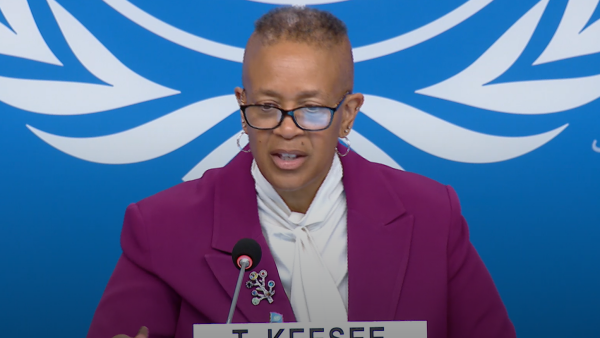
Yemen's health system nears collapse amid conflict, causing rising casualties and medicine shortages.
1
1
1
Press Conferences | HRC
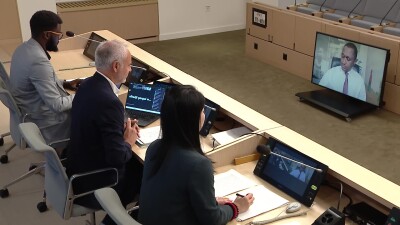
Update by the Expert Mechanism to Advance Racial Justice and Equality in Law Enforcement
1
1
1
Press Conferences | WIPO , WHO , UNICEF , UNHCR , IOM , WFP , FAO
WIPO Global Innovation Index 2026 launch and press conference, WHO Composition of influenza vaccines for the 2027 Southern Hemisphere flu season, UNICEF Yemen hunger and malnutrition; UNHCR Sudan displacement into Chad; IOM Ebola and population movements in DRC; WFP emergency food assistance in Nepal; and FAO food loss and waste.
2
1
2
Press Conferences | UNCTAD
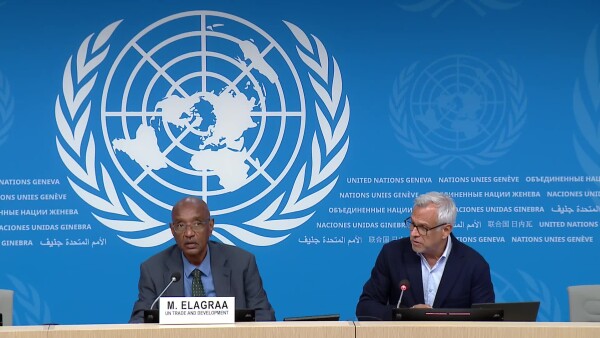
Gaza reconstruction needs reach $71.5 billion as Palestinian economy and public finances face severe strain. Latest UNCTAD report documents the loss of decades of development gains, economic collapse in Gaza and tightening economic constraints in the West Bank.
The report identifies three immediate priorities: transferring withheld Palestinian revenues, safeguarding the banking system and aligning reconstruction support with the documented scale of damage and economic losses.
1
1
1
Press Conferences | HRC
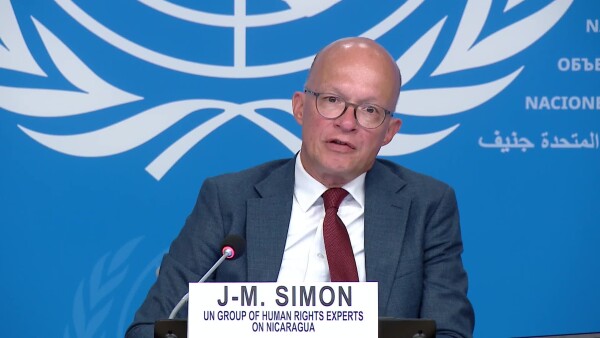
Press conference on the situation of human rights in Nicaragua by the UN Group of Human Rights Experts
1
1
1
Press Conferences | ITU , UNHCR , WHO , WMO
YEMEN - UNHCR: Escalating conflict in Yemen could fuel more displacement, refugee movement
CLIMATE - WHO / WMO: Health and Climate impact of El Niño